YouTube Just Killed the AI Video Gold Rush is OVER (And Most of You Are Screwed) – The AI Video Gold Rush is OVER!
Published August 2026 · Opinion
If you built a faceless channel on AI video, this is the post that tells you the party is over. Not “the party is slowing down.” The AI Video Gold Rush is OVER.
In case you haven’t noticed, the AI Video Gold Rush is OVER, and many creators are feeling the impact.
On July 15, 2025, YouTube quietly rewrote the rules that decide who gets paid for AI-generated video. The changes don’t ban AI content — they make most of it impossible to monetize. If you’ve been following the “AI video gold rush” playbook, you should know that the AI Video Gold Rush is OVER, and your channel may now be a liability.
Here’s what actually happened, what it means, and why the faceless-channel business model you’ve been building on is standing on shakier ground than ever heading into 2026.
What YouTube Actually Did
The Reality: The AI Video Gold Rush is OVER
YouTube didn’t announce a ban. It updated its YouTube Partner Program (YPP) policy — renaming what used to be called “repetitious content” to “inauthentic content,” and clarifying what that covers in the AI era.
YouTube’s own explanation was blunt: “On July 15, 2025, YouTube is updating our guidelines to better identify mass-produced and repetitious content. This update better reflects what ‘inauthentic’ content looks like today.”
Rene Ritchie, YouTube’s Head of Editorial & Creator Liaison, publicly downplayed the scale of the change, calling it a “minor update” to a longstanding policy rather than a new one. But minor or not, the practical target is unmistakable: channels built on volume.
YouTube gave specific examples of what now counts as inauthentic:
– Channels uploading narrated stories with only superficial differences between them
– Channels uploading slideshows that all share the same narration
– Recycled clips with minimal editing
– AI voiceovers layered over stock footage with no personal input or storytelling
The critical nuance: this content isn’t against YouTube’s community guidelines and doesn’t get taken down. It just can’t earn money. And YouTube was clear that reaction videos, commentary, and channels that use AI as one tool in a real production process aren’t the target — the target is content that’s mass-produced with little to no human creative input.
Understanding that the AI Video Gold Rush is OVER is crucial for adapting your strategy moving forward.
Why This Still Matters Rounding Out 2026
This wasn’t a one-off policy footnote — it set the direction YouTube has kept moving in. Three reasons this still matters for anyone building an AI video channel right now:
- The faceless channel playbook is a liability, not a strategy. The “make dozens of AI shorts a day, post everywhere, collect ad revenue” approach that’s been sold to thousands of creators is exactly the kind of “mass-produced and repetitious” pattern this policy targets. The more closely you followed that playbook, the more your channel resembles what YouTube is actively trying to filter out.
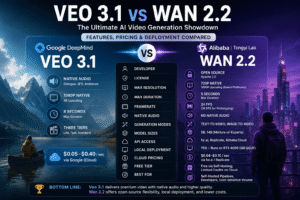
- Google is, in a real sense, competing with its own customers. YouTube CEO Neal Mohan has named managing AI slop as one of the platform’s top priorities for 2026 — at the same time Google is selling creators tools like Veo 3.1 and Gemini to generate video content. There’s a real tension in a company selling you the generation tool and then setting the bar for what counts as monetizable output on its own platform. That’s not necessarily a conspiracy — but it is a structural conflict of interest worth naming.
- “Slop” went from meme to defining word of the year. Merriam-Webster named “slop” its 2025 Word of the Year, defining it as “digital content of low quality that is produced usually in quantity by means of artificial intelligence.” That’s not a niche creator complaint anymore — it’s now recognized as one of the defining cultural and linguistic stories of the year. Platforms are responding accordingly.
Who’s More Exposed, and Who’s Better Positioned
As many have noticed, the AI Video Gold Rush is OVER for creators who rely solely on mass production without originality.
Not everyone in the AI video space is affected equally.
More exposed:
– Faceless channels built on mass-produced, templated AI shorts
– Channels that recycle existing clips or footage with minimal alteration
– Anyone who’s been told “volume is the strategy” — under this policy, volume without originality is now the risk signal, not the growth hack
Better positioned;
– Channels that use AI as a tool within a real production process, not as the entire pipeline
– Creators producing original, genuinely informative or entertaining content, regardless of what tools were used to make it
– Anyone who can point to a channel and say “this reflects a real point of view, not a template”
The dividing line isn’t “do you use AI.” It’s “does your channel look like a factory or a creator?”
What You Should Do Right Now
If you’ve been leaning on AI video volume, this is worth addressing proactively rather than waiting to see if it becomes a problem.
Recognizing that the AI Video Gold Rush is OVER is essential for anyone still clinging to outdated methods.
1. Audit your channel honestly: Look at your most-viewed videos and biggest sources of watch time. If a meaningful share of your uploads are templated, near-identical, or built from recycled clips with light editing, that’s the pattern this policy is designed to catch.
2. Kill the volume-first approach: Posting large numbers of near-identical clips is no longer a reliable growth hack — treat it as a demonetization risk. Fewer, more original videos beats more of the same.
3. Add a real point of view: The most durable move is content that couldn’t be mass-produced — original analysis, a distinct perspective, real expertise. That’s what separates a creator from a content farm, and it’s what this kind of policy is designed to reward.
4. Be careful with AI personas on sensitive topics: If you’re using an AI avatar to discuss money, health, or other high-stakes topics, be transparent about the AI usage and make sure the content reflects real expertise or clear disclosure — not just a synthetic voice reading a script.
The Bottom Line
The pure-volume AI video playbook is on its way out. YouTube signaled that clearly with the July 2025 policy update, and Neal Mohan’s 2026 priorities confirm the direction hasn’t reversed — if anything, it’s accelerating.
As the industry evolves, one thing is clear: the AI Video Gold Rush is OVER, and adaptation is key.
The good news buried in this: the tools didn’t get worse. The bar got higher. The creators who do well in the next phase of AI video won’t be the ones who generated the most clips. They’ll be the ones who used AI to say something a template never could.
That’s a harder game. It’s also the one that’s actually built to last.
The reality is that the AI Video Gold Rush is OVER, demanding a shift in how we create content.