OpenAI Sora vs Kaiber AI (2026): Cinematic Realism vs Artistic Expression
In the rapidly evolving world of AI video generation, two very different creative philosophies have emerged If you enjoy comparing tools with opposing creative approaches, also see our Runway Gen-3 Alpha vs Pika 2.0 comparison — another professional-grade vs consumer-creative showdown.: OpenAI’s Sora technology, focused on cinematic realism and physical coherence, and Kaiber AI, built around stylized, music-driven visual storytelling.
While OpenAI shifted away from Sora as a standalone platform in 2026, its video-generation technology continues influencing the broader AI video landscape through ChatGPT integrations and ongoing model improvements. Meanwhile, Kaiber AI continues expanding as a creator-focused platform for musicians, artists, and experimental visual content.
If you’re a content creator, marketer, filmmaker, or digital artist trying to decide which AI video tool best fits your workflow, this comprehensive comparison breaks down everything you need to know — including features, pricing, strengths, limitations, and ideal use cases.
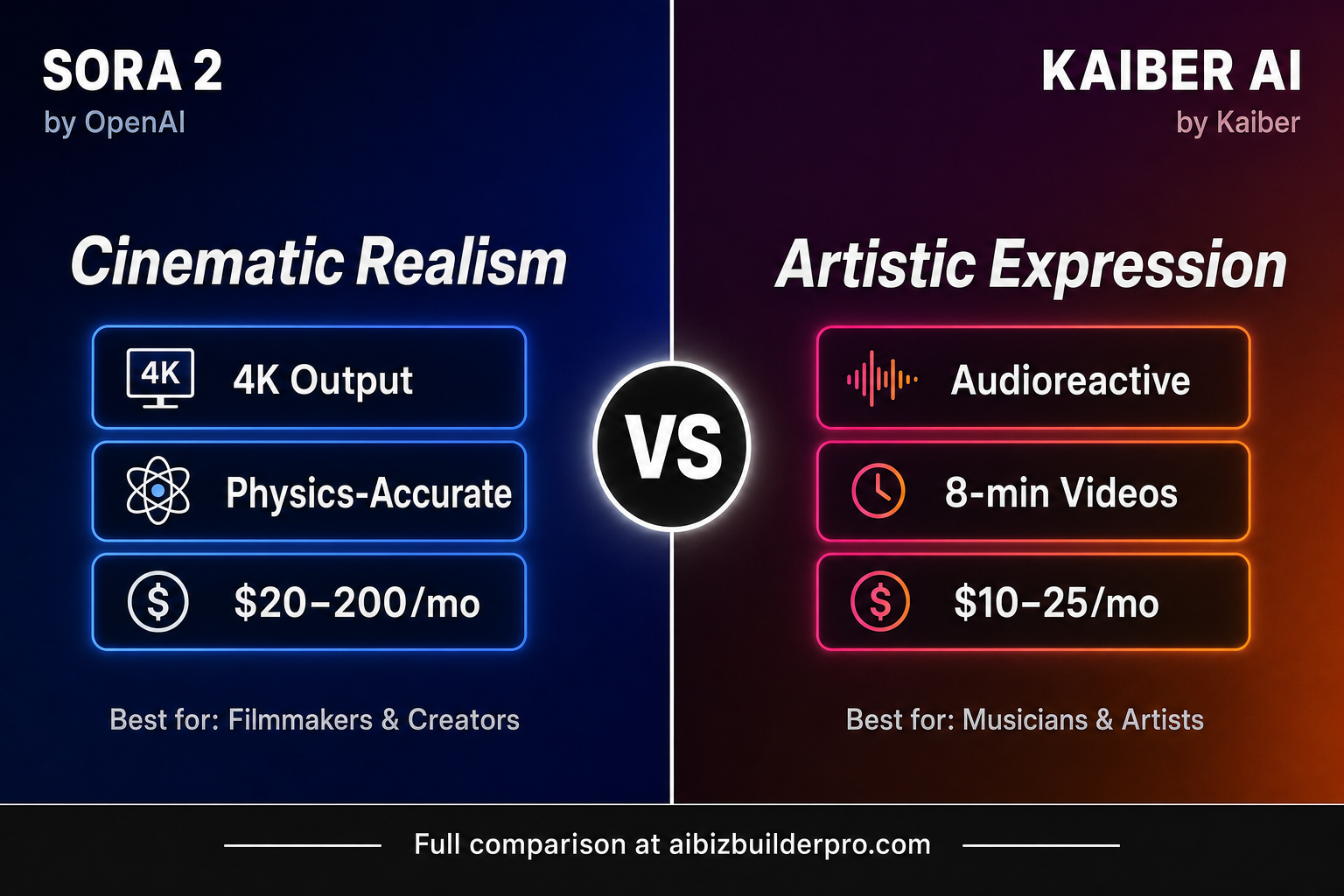
The comparison of OpenAI Sora vs Kaiber AI highlights two very different approaches to AI-powered video creation: photorealistic cinematic generation versus highly stylized artistic storytelling.
What Is OpenAI Sora?
OpenAI’s Sora is an advanced AI video generation model designed to create highly cinematic, realistic video clips from text prompts and images.
Originally introduced as a groundbreaking text-to-video system, Sora quickly became known for its ability to generate visually coherent scenes with realistic lighting, camera motion, environmental detail, and improved physical realism compared to earlier AI video models.
Although OpenAI discontinued the standalone Sora web experience in 2026, the underlying technology continues to influence AI video creation workflows and remains one of the most recognizable names in generative video AI.
Key Capabilities
- High-quality cinematic video generation
- Realistic lighting, environments, and camera movement
- Text-to-video and image-to-video workflows
- Improved temporal consistency and motion realism
- Advanced scene understanding and prompt interpretation
- Multi-shot cinematic composition capabilities
Sora is best suited for creators who prioritize realism, production quality, and cinematic presentation.
Ideal applications include:
- Commercial advertising
- Film pre-visualization
- Educational content
- Product showcases
- Corporate presentations
- Concept visualization
What Is Kaiber AI?
Kaiber takes a completely different approach to AI video creation.
Rather than chasing photorealism, Kaiber focuses on artistic transformation, stylized animation, and music-driven visual storytelling. Since launching in 2021, the platform has become especially popular among musicians, social media creators, and digital artists looking to create visually distinctive content quickly.
Kaiber excels at turning images, videos, and audio tracks into animated artistic experiences.
Key Capabilities
- Audioreactive video generation
- Music-synced visuals and animations
- 100+ artistic styles and visual effects
- Image-to-video and video transformation workflows
- Storyboard-style scene creation
- Animation-focused creative tools
- Stylized motion graphics and visualizers
Kaiber is particularly well suited for:
- Music videos
- YouTube Shorts
- TikTok and Instagram Reels
- Lyric videos
- NFT and digital art projects
- Experimental visual storytelling
OpenAI Sora vs Kaiber AI: Head-to-Head Comparison
| Feature | OpenAI Sora | Kaiber AI |
|---|---|---|
| Primary Focus | Cinematic realism | Artistic stylization |
| Video Style | Photorealistic | Stylized / animated |
| Audio Reactivity | Limited | Advanced audioreactive tools |
| Best Use Case | Commercial & cinematic content | Music videos & creative content |
| Prompt Complexity | Handles highly detailed prompts | Works best with focused prompts |
| Camera Controls | Advanced cinematic motion | Basic motion controls |
| Visual Styles | Primarily realistic | 100+ artistic styles |
| Video Transformation | Limited image/video workflows | Strong transform & restyle modes |
| Learning Curve | Moderate | Beginner-friendly |
| Ideal Audience | Filmmakers, marketers, educators | Artists, musicians, social creators |
| Output Length | Short cinematic clips | Longer-form stylized videos |
| Commercial Usage | Available on paid tiers | Available on paid tiers |
Pricing Comparison (2026)
OpenAI Sora Access
Sora functionality has historically been connected to paid ChatGPT plans rather than existing as a fully separate consumer platform.
Pricing, access limits, and video-generation availability may vary depending on OpenAI subscription tiers and evolving feature rollouts.
Users interested in Sora-related video generation should check:
Because OpenAI has adjusted Sora access several times since launch.
Kaiber AI Pricing
Kaiber currently offers several creator-focused pricing tiers.
Typical plans include:
- Starter plans for casual creators
- Creator-focused monthly subscriptions
- Higher-tier plans with increased rendering credits and priority processing
Current pricing and features are available at:
Kaiber generally offers significantly more total video duration per dollar compared to cinematic AI generation platforms focused on realism.
When to Choose OpenAI Sora
OpenAI Sora is the better choice when realism and cinematic presentation matter most.
1. Commercial Advertising
Generate realistic product visuals, branded environments, and cinematic storytelling concepts without traditional production costs.
2. Film Pre-Visualization
Directors and creative teams can prototype scenes, camera movement, and compositions before expensive live-action shoots.
3. Corporate and Educational Content
Sora’s realistic presentation style works well for training videos, explainers, simulations, and professional presentations.
4. Product Demonstrations
Create polished visual demonstrations for software, products, architecture, or conceptual designs.
5. Realistic Concept Visualization
Generate cinematic mockups of ideas, locations, environments, or future products.
When to Choose Kaiber AI
Kaiber shines when creativity, visual identity, and artistic expression take priority over realism.
1. Music Videos
Kaiber’s audioreactive tools make it especially useful for musicians and producers who want visuals synchronized to music.
2. Social Media Content
Stylized visuals help creators stand out on platforms like TikTok, Instagram Reels, Facebook Reels, and YouTube Shorts.
3. Artistic Storytelling
Kaiber enables creators to experiment with surreal visuals, animation styles, and highly creative visual effects.
4. Lyric Videos and Album Visualizers
Transform static artwork into dynamic visual experiences synchronized to audio.
5. Digital Art and NFT Projects
Generate animated visual art for collectibles, online galleries, and creative campaigns.
Technical Performance Comparison
Generation Speed
OpenAI Sora
- Typically optimized for shorter cinematic clips
- Processing speed depends on server demand and account access level
Kaiber AI
- Faster for stylized content generation
- Rendering time varies based on style complexity and video length
Visual Quality
OpenAI Sora
- Strong cinematic realism
- Improved motion consistency
- More coherent environmental interactions
- Better realistic lighting simulation
Kaiber AI
- Quality depends heavily on selected artistic style
- Stylization often masks common AI animation artifacts
- Strong visual creativity over realism
Ease of Use
OpenAI Sora
Requires stronger prompt-writing skills and cinematic terminology knowledge for best results.
Kaiber AI
Offers a more visual, creator-friendly workflow with drag-and-drop functionality and intuitive style selection.
Can You Use Both Together?
Many creators are combining both workflows strategically.
A common hybrid approach looks like this:
- Use OpenAI Sora for realistic cinematic scenes, commercials, or client-facing content
- Use Kaiber AI for social media visuals, music content, stylized storytelling, and creative campaigns
This combination allows creators to balance professional realism with high-volume artistic output.
Final Verdict: OpenAI Sora vs Kaiber AI
OpenAI Sora and Kaiber AI are not direct replacements for one another.
They solve different creative problems.
Choose OpenAI Sora if your priority is:
- Cinematic realism
- Professional presentation
- Realistic environments and motion
- Commercial-quality visuals
- Film-style storytelling
Choose Kaiber AI if your priority is:
- Artistic expression
- Music-reactive visuals
- Stylized animation
- Social media creativity
- Fast, high-volume visual experimentation
The future of AI video creation will likely involve multiple specialized tools rather than a single all-in-one platform. Understanding when to use realism versus stylization is becoming one of the most important creative decisions for modern content creators.
For filmmakers, marketers, educators, musicians, and digital artists alike, both OpenAI Sora and Kaiber AI represent powerful examples of how AI is transforming visual storytelling in completely different ways.